
Australian Labradoodle Coat Types: Fleece, Wool, and Hair Explained
Australian Labradoodle coat types come in three varieties — fleece, wool, and hair — and the difference matters for shedding, allergies, and grooming. Fleece is soft, wavy, and the most low-maintenance. Wool is denser and curlier, just as low-shedding but needs more frequent brushing. Hair sheds the most and has been largely bred out of well-managed multigenerational lines. Most families looking for the breed’s signature low-shedding, allergy-friendly qualities do best with a fleece or wool coat.
Australian Labradoodles come in three coat types, and knowing the difference helps you pick the right dog and care for it well. For most families searching for an Australian Labradoodle for sale, understanding fleece, wool, and hair coats up front means fewer surprises later, both in grooming time and in how the dog feels day to day.
The fleece coat
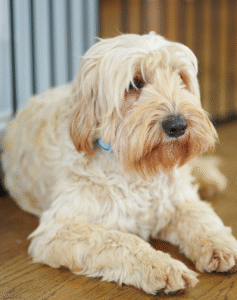
Fleece is the coat most people picture when they think of an Australian Labradoodle: soft, with a gentle wave or loose curl, and a light, silky feel. It sheds very little and is generally the most forgiving to maintain. Regular brushing a few times a week and a trim every couple of months keeps it looking its best. For many allergy-conscious families, the fleece coat is the sweet spot of look, feel, and easy care.
The wool coat
The wool coat is denser and curlier, closer to a Poodle’s texture. It is also low-shedding and can be a great fit for allergy-sensitive homes, but the tighter curl means it can mat more easily if it isn’t brushed regularly. If you love the plush, curly look, a wool coat is lovely — just plan on staying consistent with grooming. Fleece and wool coats both shed very little; the real trade-off between them is simply how much brushing each one needs.
The hair coat
The hair coat is straighter and sheds more, closer to a Labrador’s coat. Because low shedding is central to what makes the breed appealing, the World Wide Australian Labradoodle Association’s breed standard describes the ideal coat as low to non-shedding, which is why well-managed multigenerational programs have largely selected away from hair coats in favor of fleece and wool. You’re far more likely to see a hair coat in an early-generation cross than in a properly bred multigenerational Australian Labradoodle.
Australian Labradoodle coat types compared
| Coat type | Shedding | Texture | Grooming needs | Allergy-friendly |
|---|---|---|---|---|
| Fleece | Very low | Soft, wavy to loosely curled | Brush a few times a week, trim every 8-12 weeks | Yes |
| Wool | Very low | Dense, tightly curled | Brush more often to prevent matting | Yes |
| Hair | Higher | Straight | Standard brushing, more shedding to manage | Less so |
How coat type affects shedding and allergies
No dog is truly one hundred percent hypoallergenic — the AKC is clear on this point even for breeds marketed as allergy-friendly — but fleece and wool coats shed very little and release less dander, which is why so many allergy-conscious families choose this breed. If someone in your home has allergies, we always recommend spending time around the breed before you commit. Multigenerational breeding also makes coat type far more predictable, so you have a good idea of what a puppy’s adult coat will be well before you bring it home.
When does a puppy’s coat change to its adult coat?
Puppies aren’t born with their final coat. Most Australian Labradoodle puppies go through a coat change between roughly 8 and 15 months old, when the soft puppy fuzz gradually gives way to the mature fleece, wool, or hair texture the dog will keep for life. This transition period often brings more tangles and mild shedding as the two coat types overlap, so it’s worth stepping up brushing frequency during those months even if your puppy’s earlier coat barely needed it. By the time the adult coat is fully in, grooming needs settle back into the routine for whichever coat type your dog ended up with.
Grooming by coat type
Whatever the coat, a little routine goes a long way:
- Fleece: brush a few times a week, professional trim every 8 to 12 weeks.
- Wool: brush more often to prevent matting, with regular professional grooming.
- All coats: check ears, keep nails trimmed, and watch for tangles behind the ears and legs.
Grooming is also something we can help with directly. Once your dog is part of the Bestland family, you can board your dog with us and have them groomed during the same stay, so they come home settled and looking their best. You can learn more about how we raise our litters on our puppy development process page, meet our dogs, and see current litters on the available puppies page.
Coat type questions, answered
Which Australian Labradoodle coat sheds the least? Fleece and wool coats both shed very little. The hair coat sheds more, which is why it’s uncommon in well-bred multigenerational lines.
Which coat is easiest to care for? The fleece coat is generally the most forgiving. Wool coats are just as low-shedding but need more frequent brushing to prevent matting.
Can you predict a puppy’s adult coat? Largely, yes. Multigenerational breeding makes coat type predictable, so a responsible breeder can give you a reliable sense of a puppy’s mature coat well before you bring it home.
Are Australian Labradoodles good for allergy sufferers? Their low-shedding fleece and wool coats make them a popular choice, though no dog is fully hypoallergenic. Spend time with the breed first if allergies are a concern.
Do all three Australian Labradoodle coat types show up in the same litter? It’s possible, especially in less predictable pairings, which is exactly why multigenerational breeding matters — it narrows the range of coat outcomes a breeder can expect and tell you about.
Find an Australian Labradoodle for Sale
Every Bestland Australian Labradoodle is raised in our home on a 40-acre farm, comes from health-tested parents, and is backed by breeder support that includes the option to board and groom your dog with us later on. Read what families say about their experience on our testimonials page. To ask about the Australian Labradoodle coat types in our current litters, call 770-709-8497, reach out, or start your puppy application.